
When real estate firms, developers, and community members look at the same commercial corridor, they often see very different landscapes. A developer or investor might see site development standards and long-term land policy potential, while residents see daily routines, mobility barriers, and the cultural fabric of their neighborhood.
In a market like Houston, where municipal development relies on specialized ordinances and land use policies rather than traditional zoning, bridging this gap is more than good community practice; it is essential real estate strategy. Successful corridor revitalization and long-term project viability depend on more than quantitative metrics and high-level site plans. They rely on collecting, managing, and leveraging qualitative data to make sound, risk-mitigated decisions on behalf of our clients.
Collecting Human-Centric Insights: The Walk Audit in Practice
Quantitative tools tell you what exists on paper, but qualitative tools tell you how a neighborhood functions in reality. One of the primary tools our firm uses for community engagement and field data collection is the walk audit.
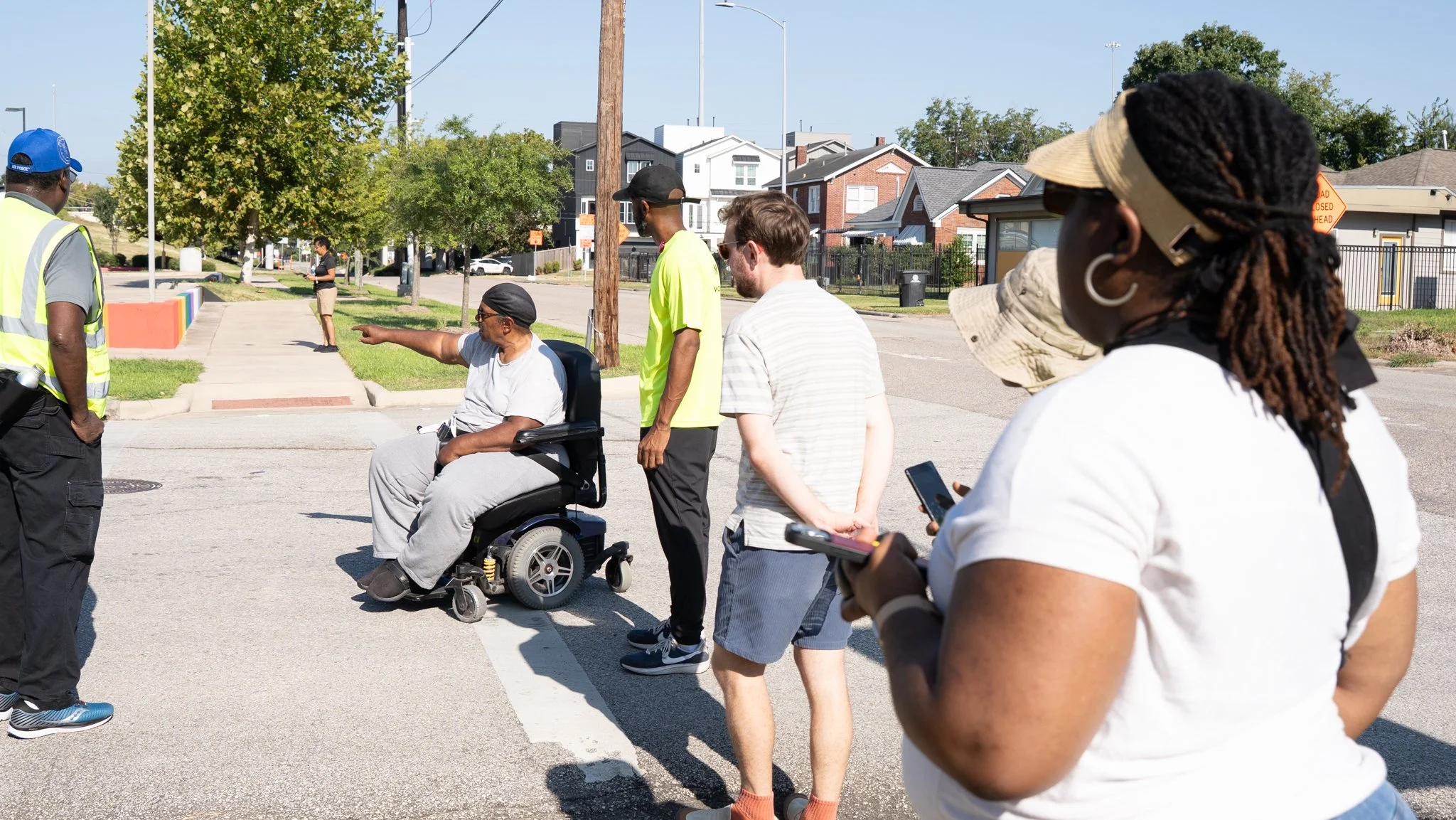
Putting thought leadership into active practice, our firm recently designed and facilitated a comprehensive walk audit on behalf of a local neighborhood nonprofit. Rather than evaluating the corridor solely from behind a desk, we brought community stakeholders, advocates, and decision-makers directly onto the street.
During this study, the value of our qualitative approach was proven instantly: a local resident pointed out a single uneven sidewalk curb, an issue completely invisible on standard survey maps, replat documents, or engineering plans. For someone using a motorized wheelchair, that single curb represented an impassable barrier, cutting off access to surrounding commercial spaces and vital community assets.
By leading these hands-on field initiatives, we translate lived community experiences into actionable, structured data points.
Managing and Leveraging Qualitative Data for Strategic Value
Collecting qualitative insights is only the first step; the true competitive advantage comes from how that data is managed and applied to protect and enhance real estate investments:
Informed Risk Mitigation: Uncovering accessibility barriers, traffic pain points, and local sentiment early allows us to help developers proactively adjust designs—ensuring smooth navigation through municipal ordinances, Chapter 26/42 requirements, and community feedback without costly mid-project revisions or delays.
Optimized Tenant Strategies & Value Alignment: Ground-level data reveals true foot-traffic habits and underserved market needs, allowing us to curate tenant mixes that genuinely serve the surrounding population, driving sustained foot traffic and long-term lease stability.
Strengthened Revitalization Frameworks: By synthesizing qualitative narratives with local policy requirements and traditional market research, we offer clients a clear, defendable roadmap for projects that align with city revitalization goals and neighborhood stability.
Actionable Solutions for Co-Created Development
To convert local intelligence into scalable success, our firm leverages specific advisory frameworks and digital tools:
Interactive & Aggregated Data Platforms: We collect and map street-level accessibility metrics, pedestrian flow notes, and community feedback alongside active development pipelines, equipping project teams with rich context.
Community Engagement Toolkits: We design and deploy targeted engagement frameworks during pre-development, streamlining municipal variance processes and development approvals while building authentic local backing for our clients' projects.
Data-Backed Policy & Advisory: We work alongside municipal leaders, economic development entities, and decision-makers to align private real estate strategies with broader land use policies, ensuring growth strengthens the entire corridor.
Building Sustainable Value Together
Real estate development and community vitality are deeply symbiotic. True project success does not come from imposing an isolated vision onto a neighborhood; it comes from establishing a solid foundation where project goals and community realities align from day one.
As experts in community revitalization, our firm remains committed to leading with ground-level insights—turning qualitative field data into smart, resilient, and highly valuable real estate decisions.